Half a Hand Out the Window: Six Railway Halts Where the Train Only Stops If You Ask
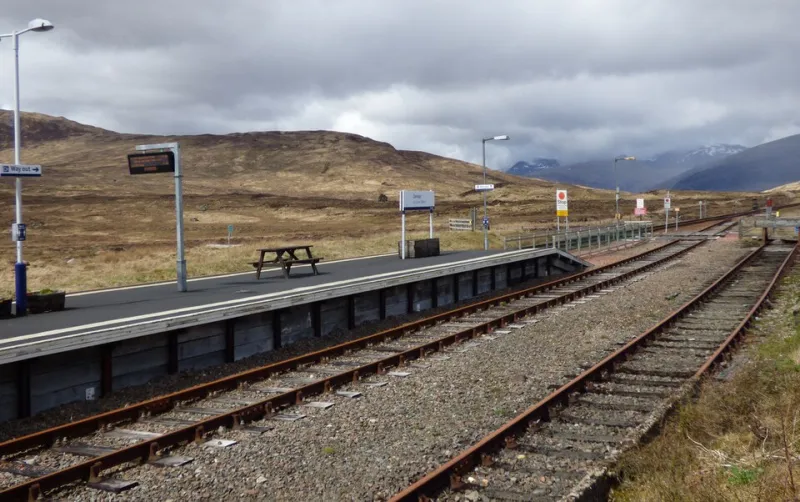
Photo: Thomas Nugent , CC BY-SA 2.0, via Wikimedia Commons
Somewhere on a single-track line in Caithness, a two-car train slows, waits, and then decides. It isn't indecision. It's a request stop. The train will only call if someone on the platform signals it, or if someone onboard has told the conductor they want to get off. Miss the ritual and you'll watch your stop slide past the window like a discarded crisp packet.
Request stops are one of the last bits of old railway practice that still ask something of the passenger. They survive because they save minutes on rural lines where a stop every few miles would make the timetable unworkable. For the traveller, they add a small, pleasing jolt of agency. You are not being conveyed so much as negotiated with.
The drill, without the mystique
Timetables mark request stops with a symbol — often an 'x' or an 'R' — and the exact method varies by line. On ScotRail's Far North services, you tell the conductor when you board, and they'll make sure the train calls. On the Heart of Wales line, you stand where the driver can see you and put a hand out as the train approaches. At Corrour, you speak to the guard. The common thread is simple: make your intention known early and clearly, and don't assume anyone can read your mind through a rain-streaked window.
If you're boarding, arrive with time to spare and stand visibly near the stopping point, not behind a shelter. If you're alighting, tell the conductor as soon as you board, or find them before your stop. And always have a fallback: a later train, a bus, or the phone number of a very patient friend. Request stops reward the prepared, not the merely hopeful.
Six halts worth the ask
Corrour, West Highland Line
Corrour is the classic. No road reaches it, and the station sits alone on Rannoch Moor at over 1,300 feet. Ask the guard to stop and you step out into a landscape of bog, lochan and big weather. The walk to Loch Ossian is straightforward and quietly magnificent, and the Station House restaurant — the highest in Britain — does a decent lunch if you've timed it right. This is a request stop that feels less like a convenience and more like a key to a locked room.
Altnabreac, Far North Line
Altnabreac is less a village than a name on a map and a platform in the Flow Country. The nearest road is a walk away, and the surrounding bog is one of the most underrated landscapes in Britain — all cotton grass, dunlin and enormous skies. There is no tea room. Bring a flask and a proper coat. The reward is the silence, and the odd sensation of having asked a train to stop in the middle of nowhere, and the train having agreed.
Scotscalder, Far North Line
Scotscalder serves the village of Halkirk, about two miles away along a quiet lane. It's a request stop in the old style: a platform, a shelter, and not much else. The walk into Halkirk gives you a shop, a hotel and a sense of a working Caithness village rather than a heritage set. Come back on a later train, or make a day of it by continuing to Thurso or Wick. Either way, you'll have earned your tea.
Dunrobin Castle, Far North Line
Dunrobin Castle has its own request stop, which is the railway equivalent of a country house having its own front door on the A9. Ask to alight and you're a short walk from the castle gates, gardens and falconry displays. The castle tea room is the kind of place where a pot of tea and a scone feels earned after a morning on a two-car train. It's a request stop that makes a heritage day out feel faintly illicit, as if you've slipped in through the servants' entrance.
Bucknell, Heart of Wales Line
Bucknell sits on the Welsh side of the border, on a line that seems designed for people who like their trains slow and their villages quiet. The station is a request stop, and the village has a pub — the Baron at Bucknell — that does food and a proper welcome. Walks along the River Teme and up onto the surrounding hills are easy to stitch together. It's the sort of place where asking the conductor to stop feels less like a transaction and more like a polite conversation.
Ravenglass, Cumbrian Coast Line
Ravenglass is a request stop with options. Ask to get off and you have the La'al Ratty narrow-gauge railway, tea rooms, a beach and the start of some fine low-level walks through dunes and salt marsh. It's a station that rewards a bit of planning: check the tide, check the Ratty timetable, and give yourself enough time to wander. The request stop itself is unassuming, but the day out it unlocks is anything but.
The point of the performance
None of these halts would exist if the railway were designed purely for speed. They exist because someone, somewhere, decided that a few people a day were worth the minute it takes to stop. The little performance of asking — the hand out, the word to the conductor, the wait on a windy platform — is part of the day out. It turns you from a passenger into a participant.
So learn the drill, pack a flask, and don't be shy. The train will only stop if you ask. That's not a flaw in the system. It's the whole point.