No Car Park Required: Six Railway Stations With a Hill Walk on the Doorstep
There is a particular pleasure in stepping off a train, adjusting a rucksack and starting to climb within minutes. No car park to find, no barrier to negotiate, no half-hour drive back at the end when your legs are tired. The railway station becomes the trailhead, and the day feels simpler for it.
The six routes below are not mountaineering expeditions. They are half-day hill walks where a waymarked path leaves close to the station and climbs to a viewpoint, a hillfort or the edge of open moor. Terrain varies from forest track to steep grassy path, and return trains are rarely more than hourly on these lines — but check the day’s timetable before you set out, and always note the last train back. A hill is a fine place to be; a hill with no train home is a different kind of day out.
Edale, Derbyshire: the Kinder edge from the platform
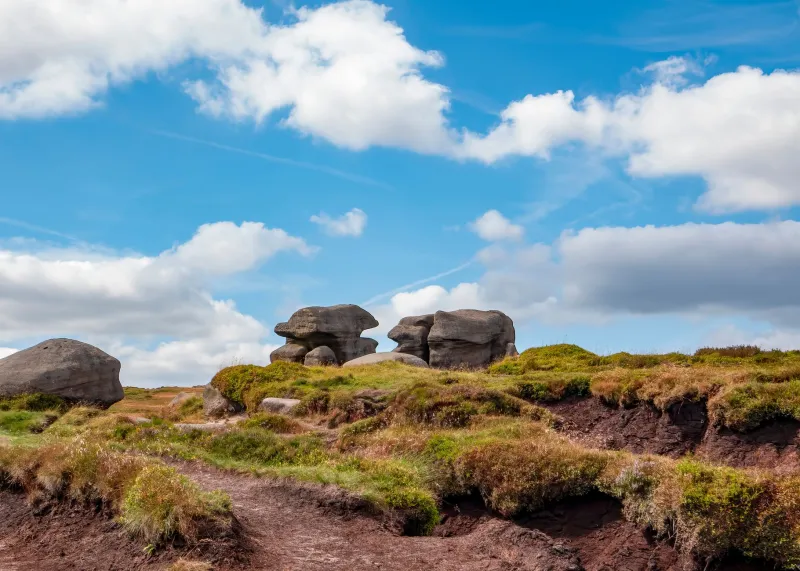
Edale station sits on the Hope Valley line with the kind of view that makes you want to start walking before you have left the platform. The path to the village is obvious, and from there signs point up Grindsbrook Clough towards the southern edge of Kinder Scout. It is a proper climb — roughly four to five miles there and back with around 400 metres of ascent — and the upper section is rocky, pathless in places and best saved for clear, dry weather. In mist, keep to the lower valley paths instead.
The reward is the sudden openness of the plateau edge and the sense of having arrived somewhere genuinely high without having driven to a car park. Allow three to four hours. Hope Valley services run roughly hourly in each direction, but the last train back can be early in winter, so build your day around it rather than hoping.
Windermere, Cumbria: Orrest Head before lunch
Orrest Head is the classic short climb from Windermere, and it is all the better for starting at the station. Walk down into the village, follow the signposted path from the main road near the Windermere Hotel, and you are on a steep but short track through woods. The top comes sooner than you expect — twenty to thirty minutes of steady effort — with a wide view over the lake and the fells beyond.
This is the gentlest walk on the list, and a good one for a short winter day or a first outing with a train ticket. Allow two to three hours including the descent and a wander round the village. Windermere is a branch-line terminus with regular connections at Oxenholme, so the afternoon return is usually straightforward — still, check the last connection south.
Great Malvern, Worcestershire: the beacon from the platform
Great Malvern station is a Victorian confection of ironwork and coloured brick, and it puts you within a short walk of the Malvern Hills. Head through town towards the hills, then follow the well-used paths up to Worcestershire Beacon. The climb is steady rather than technical, roughly three to four miles there and back, with views that open up over Herefordshire and the Severn plain.
The path is popular, but go early and you will have the upper slopes largely to yourself. Allow three hours. Great Malvern sits on the Worcester to Hereford line with a reasonable service through the day; the return timing is easy enough, but the last train still deserves a glance before you commit to a long lunch.
Church Stretton, Shropshire: Caer Caradoc and the moor edge
Church Stretton is one of those stations that feels almost too useful: step off the train, walk through the town, and the hills begin. Caer Caradoc is the obvious half-day target — a steep grassy climb to a hillfort with a view that takes in the Long Mynd and the Shropshire plain. It is around three to four miles there and back, with some genuinely steep sections and muddy ground after rain.
If the weather is poor, the lower paths towards Carding Mill Valley make a good alternative, though the full Long Mynd circuit is a longer day. Allow three to four hours for Caer Caradoc. The Welsh Marches line has a regular service, but the station is not the place to arrive back at the last minute; aim for a train with an hour to spare.
Betws-y-Coed, Conwy: Llyn Elsi above the village
Betws-y-Coed station sits on the Conwy Valley line, and the village is the gateway to a network of forest paths. The walk up to Llyn Elsi is waymarked from near the village centre: a steady climb of around two to three miles with perhaps 200 metres of ascent, on forest tracks that can be muddy underfoot. The lake itself is quiet, and the viewpoint above the village gives a fine sense of the surrounding Conwy valley.
This is a good half-day walk when the higher mountains are cloud-capped. Allow two to three hours. Conwy Valley trains run through to Llandudno Junction and Blaenau Ffestiniog, but the service is not frequent — check both directions before starting, and do not cut it fine on the last train.
Hebden Bridge, West Yorkshire: Stoodley Pike from the platform
Hebden Bridge station is on the Calder Valley line, and the walk to Stoodley Pike is a proper half-day outing: roughly five to six miles there and back, with around 300 metres of ascent. The route follows the Rochdale Canal and then climbs through fields and moorland edge to the monument, which stands on the skyline like a punctuation mark. The terrain is a mix of towpath, field paths and open moor; boots are better than trainers after rain.
Allow four hours. Calder Valley services are frequent, which makes this a forgiving walk for a late start, but the return leg is still a climb and a descent — leave enough daylight. The pleasure here is the contrast: industrial valley, canal, then sudden open moor, all from a station with no car park in sight.
A note on timing and terrain
None of these walks requires special equipment, but all of them require a little respect: proper shoes, a waterproof, water and a map or downloaded route. Mobile signal is patchy on several of the upper sections. Check the return train before you climb, not when you are tired and hungry, and take the earlier service if the weather is turning.
That is the quiet advantage of arriving by rail. The day has a natural shape: train, path, hill, train. No car park, no drive home, no half-finished walk because the parking meter ran out. Just a station, a path and a hill that starts sooner than you think.