Publish the County, Not the Car Park: A Case for Deliberately Vague Travel Writing
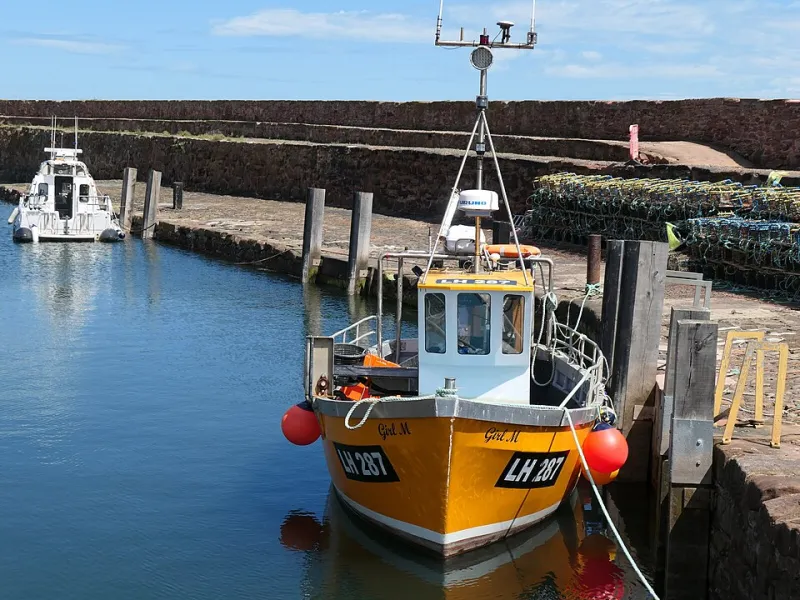
Photo: Richard West , CC BY-SA 2.0, via Wikimedia Commons
A few years ago I wrote up a small coastal car park in the north of England. Nothing remarkable — twelve spaces, a gate, a path down to a shingle beach, a view that made you stop talking. I was pleased with it. It was, I thought, exactly the sort of thing this website exists to find and share.
Two summers later I went back. The verge had been churned to mud, someone had left a barbecue tray in the hedge, and a couple were having a tense conversation about whether the insurance would cover the scrape on their bumper. Nobody had done anything wrong, exactly. They had all read something.
The problem with a really good pin
Travel writing has always been in the business of pointing at things. What has changed is the precision. A 1998 guidebook said 'the beach below the headland, an hour's walk from the village'. A 2026 post says 'park here, at these coordinates, walk seventeen minutes, this is the exact rock'.
That is not generosity. It is a delivery mechanism. And the places least equipped to absorb delivery — a twelve-space car park, a single-track lane, a village with one pub and no public toilets — are precisely the places that get written up as hidden gems, because 'hidden' is the compliment we pay to somewhere we have decided we found first.
Nobody is the villain here
It is worth saying plainly that the people reading these articles are not the problem. Neither, really, are the people writing them. Most of us got into this because we love these places and want other people to love them too. There is no malice in a geotag.
But intent is not the same as outcome. A fragile place absorbs a hundred extra visitors a year without noticing. It does not absorb five thousand, concentrated into twelve Saturdays between May and September, all arriving between eleven and two because that is when the article said the light was best.
What vagueness actually looks like
Vague does not mean useless. A good vague piece is more useful than a bad precise one, because it teaches you how to find your own version of the place instead of handing you the exact one everybody else has.
It means writing 'the quieter end of the county, an hour from the nearest station' instead of naming the bay. It means describing a lane as 'the sort of single-track road that takes twenty minutes to do four miles' and letting the reader work out which one. It means recommending a rail line and a stretch of coast path rather than a postcode.
It also means being honest about why you are doing it, rather than performing coyness. 'I am not going to tell you exactly where this is, because it cannot cope with you' is a complete sentence, and a fair one.
A working code for 2026
None of this is new. What is new is that the volume has changed — another record summer of domestic travel, another year of short video turning a lay-by into a destination in a fortnight. So here is a code I would happily sign up to, and would gently push at anyone else writing about quiet Britain.
- Publish regions and routes, not pins. Name the county, the rail line, the long-distance path, the stretch of coast. Let people navigate the last mile themselves.
- Describe the kind of place, not the place. 'A shingle beach with a stream running across it' is a better recommendation than a grid reference, and it filters for the reader who actually wants that.
- Favour rail and foot. If a place can be reached by train and a walk, say so loudly. It halves the parking problem and doubles the pleasure of arriving.
- Send volume where volume is welcome. Country parks, National Trust car parks, town centres, forests with a cafe and a loo. There is no shame in recommending somewhere that can take the traffic.
- Never publish wild camping spots, private land, or the bit of verge that one farmer has tolerated for years. This is not a grey area.
- Strip the metadata from your photos. A geotag is a pin with better lighting.
- Give a reason to go out of season. A Tuesday in February is a different place from a Saturday in August, and often a better one.
- If you must name something fragile, name the alternative too. 'Don't park here — park at the village and walk in from the other side' is a genuinely helpful sentence.
What we are doing here
This is not a lecture from a clean pair of hands. We have been part of the problem — that car park article was ours, and we have taken it down.
What we are moving towards is a house style with fewer postcodes in it. Rail journeys that start at a station and end at a station. Road trips built around a whole road rather than a single viewpoint. Coastal walks described by their character and their access points, not their most photographed ten metres. Where we do name something specific, we will try to name the sort of specific that can cope: a town, a ferry slipway, a station, a pub with a car park and a landlord who is pleased to see you.
The contradiction, admitted
Yes, this is an article about not being precise, published on a travel website whose entire purpose is to tell you where to go. Yes, I have named a county and no beach. The tension is real, and I do not think it resolves neatly.
But there is a difference between guiding someone towards a corner of Britain and delivering them to an exact square metre of it. The first is what travel writing has always done. The second is what a map pin does, and the map pin does not care whether the place survives the attention.
So: go. Take the train, take the slow road, take the walk that is longer than it needs to be. Find your own version of the quiet bit. Just do not ask us for the postcode, because we are not going to give it to you.