Six Spans, One Timetable: Viaduct Walks That Begin on the Platform
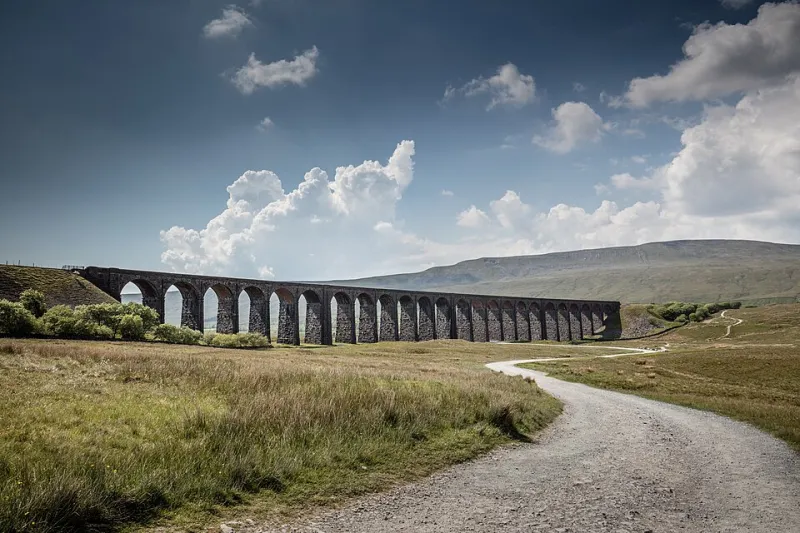
Photo: Michael D Beckwith, CC0, via Wikimedia Commons
Viaducts are usually something you glimpse from a train window: a flash of stone, a row of arches, then a tunnel or a cutting and it is gone. But some deserve more than a glance. The best are destinations in their own right — places where you can step off a branch-line train, follow a footpath, and stand underneath a span that has been carrying passengers for well over a century.
This is a guide to six such places. None needs a car. All need a bit of timetable sense, a pair of shoes that can cope with mud, and a willingness to treat the walk — not just the train — as the day out.
Ribblehead, North Yorkshire
Start: Ribblehead station, on the Settle–Carlisle line.
You do not so much arrive at Ribblehead as arrive inside the landscape. The station sits high on the moor, and the viaduct is a short walk away — visible almost immediately, then growing until it fills the view. The classic circuit takes you out across the moor and back beneath the arches, but even the short there-and-back to the base is worth the train fare.
Allow: 90 minutes for the quick look; half a day if you want the full circular and a sit-down.
Wet weather: The moorland paths can be genuinely boggy after rain. Stick to the better-trodden route from the station towards the viaduct if conditions are poor, and save the longer loop for a drier day.
Linger for: The scale from below. From the train, the viaduct is elegant. From the path, it is enormous — a piece of Victorian engineering that seems to have been dropped into a sheep field.
If you miss the train: The Station Inn is right by the platform, and the next train is rarely far away in the grand scheme of things. If you have longer, Dent station and village make a fine alternative stop further up the line.
Calstock, Cornwall
Start: Calstock station, on the Tamar Valley line.
Calstock is one of those stations that seems to have been squeezed into the hillside by mistake. The viaduct is the star, but the walk down to the river and back up through the village is what makes the day. The Tamar is tidal here, so the view changes hour by hour — mudflats one minute, a broad sheet of water the next.
Allow: Two hours for the village and riverside; longer if you are combining it with a proper walk towards Cotehele.
Wet weather: The lanes and riverside paths can be slippery, and the hill back to the station is steep enough to make you glad of a handrail. Go steady rather than fast.
Linger for: The reflection. On a still, high-tide afternoon the viaduct seems to double itself in the water, and the whole valley goes quiet.
If you miss the train: The village has a pub and a shop, and the next train down the branch is the obvious plan. Cotehele, a National Trust property, is a longer walk but a good way to fill a missed connection if you have time.
Welwyn North and the Digswell Viaduct, Hertfordshire
Start: Welwyn North station.
This is the viaduct that thousands of commuters see every day and almost none of them walk beneath. The station sits right beside the Mimram valley, and a short network of paths takes you down to river level, where the arches rise above the trees. It is not a wilderness day out — you can hear the trains, and the A1(M) is not far away — but it is a surprisingly peaceful corner for somewhere so close to London.
Allow: One to two hours.
Wet weather: The riverside path can be muddy and tree roots are slippery. Road shoes are fine in dry weather; something with a bit more grip is better after rain.
Linger for: The view from below, where the viaduct’s arches frame the river and the fields beyond. It is the sort of thing you cannot appreciate from a seat on the 08:12.
If you miss the train: Welwyn Garden City is a short bus or walk away, with plenty of cafés and a station on the same line. The Ayot Greenway is another option for a longer walk if the timetable is against you.
Glenfinnan, Highland
Start: Glenfinnan station, on the West Highland line.
The viaduct here is famous, and for once the fame is deserved. From the station, a waymarked path climbs to a viewpoint that looks across the span to the loch and the hills. It is a proper little mountain walk in miniature: short, steep in places, and very exposed to the weather.
Allow: About an hour for the viewpoint and back, plus time at the station.
Wet weather: The path is rocky and can be slick. Low cloud often hides the hills, but the viaduct itself can look even more dramatic with a bit of mist around it. Take a waterproof and turn back if the wind is wild.
Linger for: The moment a train crosses. If you can time it — and the Jacobite steam service is the obvious one — the whole thing becomes a piece of theatre.
If you miss the train: The visitor centre and monument at Glenfinnan are close by, and the station has a small museum and a waiting room that has seen worse days. The next train is the next train; use the time.
Cynghordy, Powys
Start: Cynghordy station, a request stop on the Heart of Wales line.
This is the quiet option. Cynghordy is little more than a platform in the countryside, and the viaduct is a short walk along lanes and field paths. There is no visitor centre, no café, and no great interpretation board — just a very large piece of railway architecture in a very empty landscape.
Allow: One to two hours.
Wet weather: The lanes are fine, but the field paths can be muddy and indistinct. In really wet weather, the walk along the lane to the viaduct viewpoint is the safer bet.
Linger for: The silence. Stand under the arches on a still day and you can hear birdsong, water, and very little else.
If you miss the train: Remember that Cynghordy is a request stop — you need to hail the train. If you do miss it, Llandovery is the next practical stop down the line and has cafés, pubs and a castle to fill the wait. Check the timetable before you set out; this is not a line to treat casually.
Castlefield Viaduct, Manchester
Start: Deansgate station, Manchester.
Not every viaduct walk needs mud and moorland. Castlefield Viaduct is an old railway span turned into a sky park, and it is a short walk from Deansgate station. You can wander along the deck, look down on the canals and the bones of industrial Manchester, and then be back on a train before your tea goes cold.
Allow: An hour, unless you get distracted by the city.
Wet weather: This is the all-weather option on the list. The deck is exposed, but the streets below are not, and there is plenty to duck into nearby.
Linger for: The contrast. Here, the viaduct is not a rural monument but a piece of the city’s working past, reused and reimagined.
If you miss the train: The Museum of Science and Industry is close by, as are the canals and the bars around Castlefield. Deansgate is also a short walk from Oxford Road and Manchester Victoria, so you are not short of ways home.
A few practical notes
Viaduct walks are simple days out, but they are not quite as simple as a platform-to-platform trip. Check the timetable before you go, especially on branch lines where services are sparse or stations are request stops. Wear shoes that can handle whatever the forecast has thrown at the ground. And remember that the best views are often from paths that are not maintained like footpaths in a country park — take your time, keep to the route, and do not climb on anything that looks like railway infrastructure.
Most of all, give yourself permission to linger. The point of these days out is not to tick off a viaduct and get straight back on the train. It is to stand underneath one, look up, and wonder how on earth they built it.