The Lane Ends, the Water Doesn't: Six Holy Wells for a Slow Half-Day
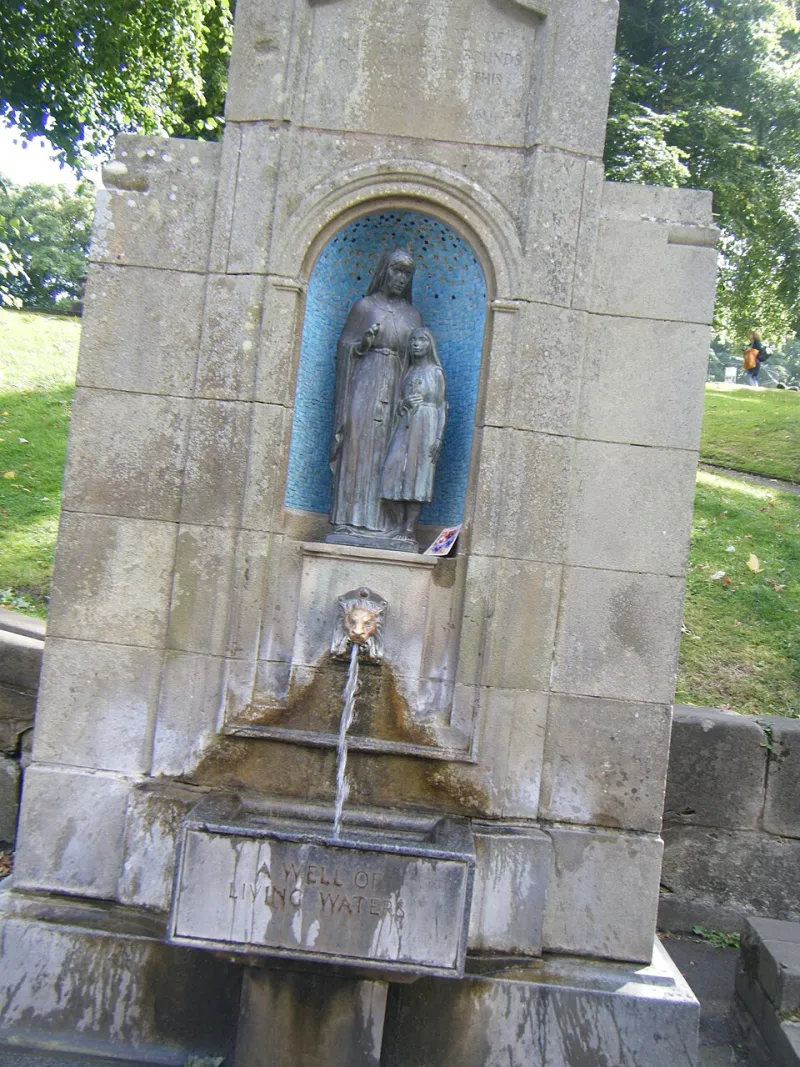
Photo: MagicRubberDuck, CC BY-SA 4.0, via Wikimedia Commons
Holy wells are not attractions in the usual sense. There is no turnstile, no audio guide, and often no obvious place to stand. They sit at the edge of a churchyard, below a field gate, or at the bottom of a lane that seems to be going nowhere in particular. That is the appeal. You do not visit a holy well so much as pass through a parish and notice one.
This is a guide to six such places, chosen because they reward a short walk rather than a long pilgrimage. Some are on the coast, some are in town, and one is a few steps from a National Trust car park. None requires special kit. All are better with a flask, a bit of quiet, and a willingness to check local access before setting off. Treat the water as historic, not drinkable, and leave the site as you found it.
St Trillo's Chapel and Well, Rhos-on-Sea
The smallest chapel in Britain may also be one of the easiest holy wells to reach without a car. St Trillo's sits on the promenade at Rhos-on-Sea, a stone's throw from the sea wall and a short bus ride or a flat walk from Colwyn Bay station. The building is tiny, built over a spring that still runs beneath the altar. You do not need to be inside for long. The point is the setting: a ancient spring, a modern promenade, and the ordinary seaside life of chip shops and dog walkers carrying on around it.
Go early or late. The chapel is sometimes locked, but the exterior and the sense of the site are available at most hours. The nearest tea is a short walk back into Rhos-on-Sea, where the cafés are cheerful rather than precious. This is a good first well if you are unsure about the whole idea: no muddy lane, no complicated parking, just a small stone room with water underneath it.
St Seiriol's Well, Penmon, Anglesey
Penmon Priory is a place of layers. There is the church, the old monastic buildings, the dovecote, and then, a short walk away, St Seiriol's Well. The well sits in a small stone chamber, tucked into the ground rather than presented as a monument. On a clear day the view opens towards Puffin Island, and you can see why the site was chosen: fresh water, shelter, and a sea route nearby.
Access is by car, with parking at the priory. The walk to the well is short but uneven in places. This is not a day out in itself, so pair it with Beaumaris, where the tea shops are plentiful and the castle is optional. The well asks for a bit of care: no candles, no plastic ribbons, no leaving things behind. A quiet look is enough.
St Dyfnog's Well, Llanrhaeadr-yng-Nghinmeirch
The church at Llanrhaeadr-yng-Nghinmeirch is worth the detour for its Jesse window alone, but the well is the reason to slow down. Behind the church, a path leads into a wooded dell where St Dyfnog's Well sits in a stone basin. It is a genuinely atmospheric spot, the kind of place where the lane and the parish seem to fold into each other.
There is parking near the church, and the walk is short enough for most people. The nearest proper cup of tea is in Denbigh or Ruthin, both a short drive away. Come in autumn if you can. The leaves do most of the work, and the well feels less like a site to be ticked off and more like a place to stand for five minutes without saying anything.
St Bertram's Well, Ilam, Staffordshire
Ilam is a Peak District village that feels slightly out of time, with its Swiss-style cottages and the River Manifold running through. St Bertram's Well is a short walk from the National Trust car park at Ilam Park, past the church and into the fields. The well is modest, but the walk makes it: a lane, a churchyard, a gate, and then the quiet of the fields.
This is a good option for a mixed group. The National Trust tea room at Ilam Park does a reliable pot of tea, and the walk can be stretched or shortened depending on the weather. The well itself is not the sort of place to linger for an hour. It is a waypoint, and that is fine. Some of the best slow days are made of waypoints rather than destinations.
St Withburga's Well, East Dereham, Norfolk
Most holy wells require a car. This one requires a bus and a short walk through a market town. St Withburga's Well sits in the churchyard at East Dereham, a quiet pocket of green just off the town centre. The story is old, but the setting is everyday: parked cars, church notices, and the sound of the high street nearby.
That is what makes it interesting. It is a reminder that these sites were never remote by design. They were part of ordinary life. The nearest tea is a few minutes' walk into Dereham, where the cafés are practical rather than picturesque. Visit on a weekday morning and the churchyard will likely be yours.
St Non's Well, near St Davids, Pembrokeshire
St Non's Well is often folded into the St Davids coastal walk, which is a shame if it means you arrive already thinking about the next mile. The well sits near the ruins of St Non's Chapel, a short walk from St Davids on the coast path. The water is said to have healing properties, but the real draw is the position: sea air, stone walls, and a sense of exposure that makes the well feel like a small shelter rather than a shrine.
You can reach St Davids by bus and walk out from the town. The path is not long, but it is uneven and exposed in bad weather. The nearest cup of tea is back in St Davids, where there is no shortage of options. This is the well to save for a clear day, when the coast is doing its usual trick of making everything else feel very far away.
A Few Practical Notes
Holy wells are not theme parks. Some are on private land, some are maintained by churches, and some are simply old springs with a story attached. Check access before you go, especially if you are travelling a long way. Do not drink the water. Do not leave offerings unless there is a clear local custom and a place for them. Keep dogs on leads around churchyards and livestock. And if a lane looks like it ends in someone's garden, it probably does.
The best way to approach these sites is as part of a half-day rather than a mission. Pair a well with a church, a pub, a tea room, or a short stretch of coast path. The well gives the walk a shape. The cup of tea gives it an ending.