The Ticket Window Sells Bread Now: Six Station Buildings With a Second Trade
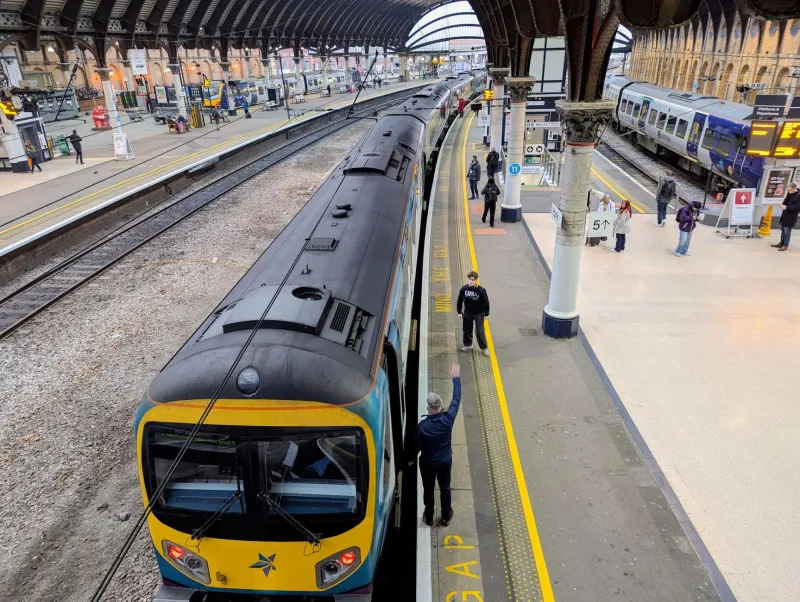
Station buildings were designed for people who were leaving. The ticket hall, the waiting room, the parcels office: all were waypoints. Then the trains went, or thinned out, and the buildings were left with the awkward job of being useful in a place that no longer expected passengers. Some became homes; some are still waiting for a roof repair. The ones worth seeking out are those that have taken on a trade you can use — a loaf, a book, a bottle — without tidying away the railway bones.
This is not a list of museums. It is a slow-travel day out in miniature: six former station buildings where the counter is roughly where the ticket window was, and where you can still read the shape of the old platform in the brickwork. Most are on or near a working line; a couple need a bus or a walk. Opening days are often short, so check before you build a day around one.
Alnwick, Northumberland: books in the old station
Barter Books is the benchmark. The old Alnwick station closed to passengers in 1968, but the overall roof, the stone walls and the platform line are still legible. Inside, the former ticket hall is a secondhand bookshop with a model railway, a café and a fire in winter. It is not a museum: people buy books, meet friends, work on laptops. That is the point. A station building that once handled passengers now handles browsing.
Practical: Alnwick has no railway station. The nearest is Alnmouth on the East Coast Main Line, about four miles away; bus or taxi, or a longer walk if the weather is kind. Barter Books is usually open daily, but hours shorten out of season.
Hexham, Northumberland: the working station with a larder
Hexham is the easy one. The station still runs trains between Newcastle and Carlisle, and the old buildings have been folded back into use as a café and food shop. You can step off a Northern service and be buying a cheese scone before the engine has cooled. The pleasure here is the ordinary mix: commuters, schoolkids, walkers heading for Hadrian's Wall. It is a station doing two jobs at once.
Practical: direct trains from Newcastle and Carlisle; the café is on the station side, so no hike. Sunday hours can be shorter, so check before a late-morning visit.
Settle, North Yorkshire: bread beside the Settle-Carlisle
Settle is a working station on the Settle-Carlisle line, and the old buildings now include a bakery in the former waiting area. The queue is usually a mix of walkers, cyclists and locals who have come for a loaf rather than a train. It is the sort of place where you can buy a coffee, sit on the platform and watch the timetable do its thing. The bread is the main event; the setting is the bonus.
Practical: trains from Leeds and Carlisle; the bakery is a few steps from the platform. Opening days are not always seven days a week, so check before you travel.
Richmond, North Yorkshire: the terminus that became a food hall
The Station in Richmond is a grand old terminus that has become a food hall, cinema and café. The building was too big to demolish and too good to leave empty; now there is bread, cheese and coffee under the old roof. It is not on a working railway, but it is a fine example of what a station can become when the trains go. You can still see the scale of the place — the sort of station that expected crowds.
Practical: nearest rail is Darlington or Northallerton, then bus; Richmond is also a good stop on a Dales road trip. Open daily, though individual traders keep their own hours.
Grosmont, North Yorkshire: steam, signals and a proper café
Grosmont sits on the North Yorkshire Moors Railway and the Esk Valley line, so you can arrive by steam or by Northern. The old station buildings are part of the theatre of the place: signals, water tower, café. The café is not fancy; it is the sort of place where a bacon sandwich is a serious undertaking. It is also a reminder that station buildings work best when they are still part of the business of travel.
Practical: trains from Whitby and Middlesbrough; the café follows the railway timetable, so check before a late-afternoon visit.
Tintern, Monmouthshire: a pause in the Wye Valley
The old station at Tintern is a visitor centre and café in a former station building. It is a good example of a station that has become a useful pause rather than a shrine. You can walk, buy a coffee, and look at the old platform edge. The trade is modest, but the building has a job again, and that is what matters.
Practical: no railway; bus from Chepstow, or a lovely drive. Seasonal hours apply, so check before setting out.
The point is not to collect stations like stamps. It is to notice that a building can change trade without losing its memory. Buy the bread, take the book, catch the train. The ticket window may be gone, but the reason to stop is still there.