Towers With No Job to Do: Six Follies Within Walking Distance of a Station
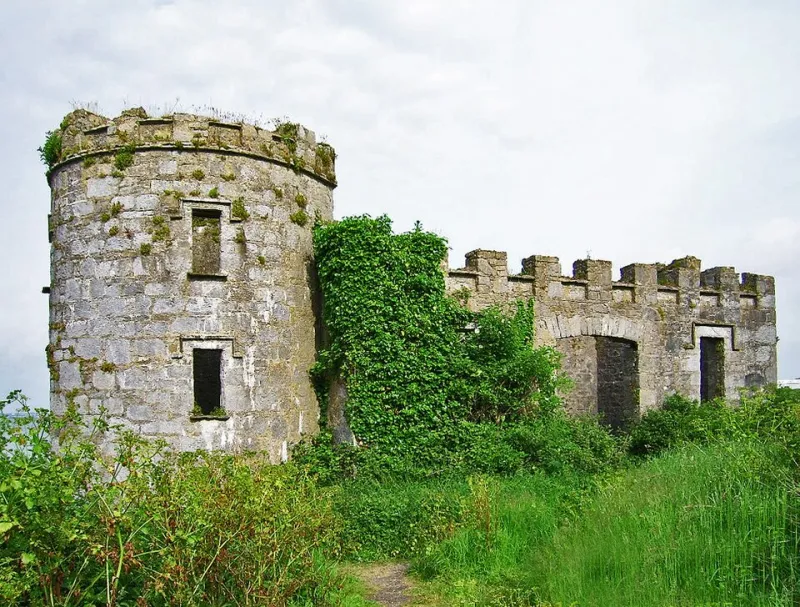
Photo: Garry Dickinson , CC BY-SA 2.0, via Wikimedia Commons
A folly is a building that has forgotten how to be useful. Britain has hundreds of them — mock castles, needle towers, ornamental ruins — and most were never meant to earn their keep. The pleasure is not just the structure itself but the approach: a footpath out of a town, a field gate, a sudden view. The six below all sit within a reasonable walk of a railway station, which means you can build the day around a timetable rather than a car park.
A word before you go: exteriors are usually free, interiors often are not, and opening hours can be gloriously erratic. Check ahead in 2026, pack a waterproof, and treat the last train as part of the route rather than an afterthought.
McCaig's Tower, Oban — the Colosseum that ran out of money
Oban station to the tower is a fifteen-minute uphill walk, and the reward is one of the strangest skylines in Scotland. John Stuart McCaig, a local banker, began the tower in 1897 as a monument to his family and a way of giving work to local stonemasons. It was never finished, never roofed, and now stands above the town like a half-remembered Roman ruin.
Entry is free. Walk up through the town, take the steps, and give yourself time at the top: the view over Oban bay and the islands is the real exhibit. There are cafés and pubs back down in town, and the West Highland Line does the rest. This is a fine half-day if you are already on the line, and a good excuse to linger before the afternoon train.
Sway Tower, Hampshire — concrete before it was fashionable
Sway station sits on the South Western main line between Brockenhurst and New Milton, and the tower is about fifteen minutes north of the platform. At 66 metres it is hard to miss: a pale concrete needle built between 1879 and 1885 by Andrew Thomas Peterson, a man with strong views about concrete and, by all accounts, a lively interest in spiritualism.
The exterior is free to see, though the tower is not generally open inside. The walk from the station is straightforward and the New Forest edge is close by. The Silver Hind in Sway does a decent pint, and the village deli is useful for supplies. It is a quiet, slightly odd day out — exactly the sort Explore Britain tends to favour.
Ashton Memorial, Lancaster — the temple above the park
Lancaster station to Williamson Park is about twenty-five minutes on foot, mostly uphill, and the last stretch through the park is a proper treat. The Ashton Memorial was built between 1907 and 1909 by Lord Ashton in memory of his second wife, Jessy, and it looks like a baroque dome that has wandered into Lancashire by mistake.
The park is free, the memorial is usually free to look around when open, and the café in the park is well placed for a sit-down. There is a small charge for the butterfly house if you want it. From the station, allow an hour each way if you are a slow walker, and check the memorial's opening times before you commit.
Wainhouse Tower, Halifax — the chimney that changed its mind
Halifax station to Wainhouse Tower is a twenty-five-minute walk uphill through the town, and the tower itself is a 253-foot reminder that Victorian businessmen did not always know when to stop. John Edward Wainhouse built it as a chimney for his dye works, then fell out with the neighbours over smoke, and the thing ended up as an ornamental tower instead.
It opens on selected days, but the exterior is free and the walk is the point. Halifax has plenty of cafés and pubs for the return leg, and the station is well served from Leeds and Manchester. Wear shoes you trust: the approach is steep in places and the pavements are honest Yorkshire pavements.
Perrott's Folly, Birmingham — the tower Tolkien saw
Five Ways station to Perrott's Folly is about fifteen minutes through Edgbaston, and the tower is a 96-foot survivor from 1758. It was built by John Perrott, and later became a useful landmark for a young J.R.R. Tolkien, who lived nearby as a child. It is not a pretty tower so much as a stubborn one.
Opening is limited and usually by arrangement, but the exterior is free to see. The Botanical Gardens are a short walk away and have a café, which makes a sensible pairing. This is an urban folly day rather than a countryside one, and all the better for it: a reminder that hidden corners exist in cities too.
Broadway Tower, Worcestershire — the castle on the escarpment
Broadway Tower sits on the hill above the village, and the walk from Broadway station — on the Gloucestershire Warwickshire Railway — takes about thirty to forty minutes uphill. Built in 1798 for the Earl of Coventry, it is a compact, crenellated folly with a view that stretches across the Cotswolds.
The grounds are free; there is a charge to go up the tower. There is a café at the tower, and the village has pubs and tea rooms for afterwards. This one depends on the heritage line's timetable, so check the day's trains before you set out. If the railway is running, it makes a lovely slow day: train, hill, tower, tea, train.
Making the timetable work for you
These are not long walks, but they are walks with a purpose, and that changes how you plan. Look at the branch line first, then the footpath, then the pub. On rural lines the last train can be early, and a missed connection can turn a gentle afternoon into a taxi ride. Carry a map or a charged phone, and do not rely on the tower being open just because the guidebook says it might be.
The best folly days are the ones where the building is only half the story. The walk up, the view back, the pint afterwards — that is the real route. Britain is full of towers with no job to do. The train is the easy part.