Castles, Cider and a Table for One: The Welsh Border Line at Weekend Pace
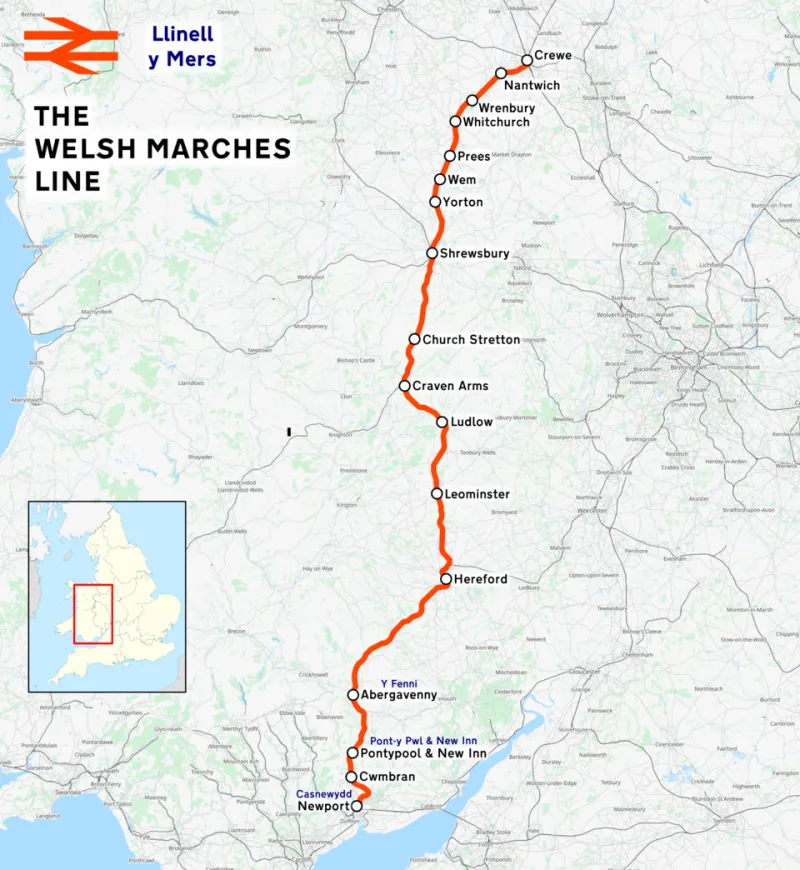
Photo: OpenStreetMap contributors, CC BY 3.0, via Wikimedia Commons
Some rail lines announce themselves. The Welsh Marches line does not. It slips out of Shrewsbury, follows the border country at its own pace, and treats places like Ludlow and Abergavenny as stations rather than stops on the way to somewhere more important. That is exactly why it works for a weekend.
Start in Shropshire, end in Newport, and let the timetable do the planning. You do not need a car. You do not need a grand tour. You need a couple of nights, a flexible ticket and the willingness to get off at towns that look too small for the fuss people make about them.
Shrewsbury: a castle, a river and a sensible start
Shrewsbury station is close enough to the centre to make the first hour easy. The station café is modest and useful if you have arrived on an early train; if you want something better, walk ten minutes into town and find breakfast near the square. The castle is a short stroll away, and the river loop below it gives you a gentle introduction to the border country before the train has even carried you properly into it.
Do not over-plan the first morning. Shrewsbury rewards a wander: the black-and-white streets, the old market halls, the paths along the Severn. Then head back to the platform and take the next southbound service. The point of this trip is not to collect stations. It is to notice how quickly the landscape changes once the train leaves the county town behind.
Ludlow: the stop that rewards an empty stomach
Ludlow station sits below the town, which means a short climb into the centre and a good excuse to arrive hungry. The castle is the obvious anchor, but the real pleasure is the town itself: narrow streets, independent shops, a market square that feels lived-in rather than staged. This is not a place to rush between attractions.
Ludlow also makes a good base for the cider country that spreads east and south. You will not find orchards on the platform, but the lanes around the town and towards the Herefordshire border are full of the sort of small farms and quiet footpaths that make the Marches feel hidden even when the train is only a few fields away. Pick up a local cider from a shop in town, ask about footpaths at the information point, and take a short afternoon walk rather than trying to cover too much ground.
If the station café is open, it is a useful place to wait for the next train. If it is not, build in a few extra minutes in town. This is a line where missing a connection is annoying rather than disastrous, but the timetable is thin enough that you should still keep half an eye on it.
Hereford: cider, cathedral and the Wye
Hereford is the big market town of the trip, and it wears its history lightly. The cathedral is the headline: the Mappa Mundi and the chained library are worth the detour, even if you are not usually a museum person. Outside, the Wye runs close enough to the centre to make a riverside walk feel like a proper escape from the platform.
For a different angle on the border country, head to the Museum of Cider. It is a small, specific kind of place, the sort that explains why this part of Britain tastes the way it does. Herefordshire cider is not a tourist gimmick; it is a working landscape, and the museum makes sense of the orchards you see from the train.
Hereford station itself is a straightforward walk from the centre. Use it as a lunch stop rather than a dash. The line between Hereford and Abergavenny is one of the prettiest sections of the journey, so if you can, take it in daylight and sit on the side that gives you the best view of the hills. You will know it when you see it.
Abergavenny: castles, a hill and a good sandwich
Abergavenny is where the Marches start to feel more Welsh than English. The station is a short walk from the centre, and the town makes an excellent base for a night. The castle ruins are free to wander, the market is worth checking, and the Sugar Loaf is the kind of hill that looks manageable from the street and then takes more out of you than expected. That is not a reason to skip it. It is a reason to pack a sandwich.
If you want a gentler day, follow the lanes and footpaths around the town rather than committing to a summit. The border country is full of small paths that do not appear on the average weekend itinerary, and Abergavenny is a good place to find them. Ask locally about conditions, carry a map, and do not rely on phone signal in the folds of the hills.
Abergavenny also works as a rail hub for the wider area, with buses heading out to Blaenavon and the eastern edges of the Brecon Beacons. If you are building a longer trip, this is the place to slow down rather than push on.
Newport: end at the Transporter Bridge
Newport is not the obvious romantic finish, which is part of its charm. The station puts you close to the centre, and the Transporter Bridge is the kind of structure that makes you stop and stare even if you have seen it in photographs. If you have time, walk the riverside and take in the mix of old docks, new buildings and flat, wide skies.
This is also where the trip reminds you that the Welsh Marches line is not a heritage railway. It is a working service, used by people going to work, school and hospital appointments. That is what makes it worth riding: you are not on a tourist train, you are on a train that happens to pass through some of the most underrated country in Britain.
Practical notes for a car-free weekend
Transport for Wales runs the service, and Sunday timetables are thinner than weekday ones, so check before you book accommodation. An off-peak return, or a combination of split tickets, will often beat a bespoke rover for a short trip; fares change, so compare before you buy. A Railcard helps if you have one.
Station cafés along the route are useful but not guaranteed to be open early or late. Carry water, and do not assume every town has a shop right by the platform. Book a room near the station if you are arriving late, and keep your walking plans flexible. The best bits of the Marches are often the unplanned lanes between the castle and the tea stop.
Above all, resist the urge to tick off every stop. The Welsh Marches line rewards the person who gets off, walks a little, and waits for the next train. That is not a slow way to travel. It is the whole point.