A Bench, a Timetable and Nowhere to Be: Six Rural Bus Shelters for a Slow Half-Day
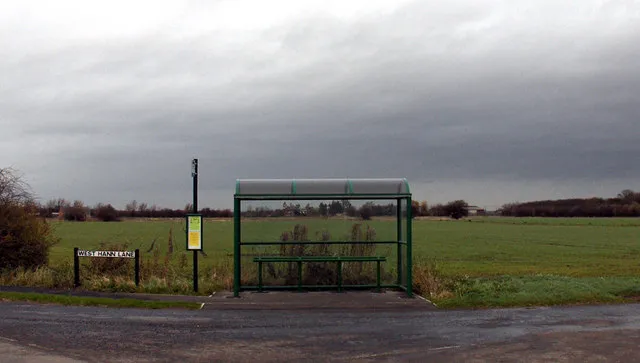
Photo: David Wright, CC BY-SA 2.0, via Wikimedia Commons
There is a particular kind of British bus shelter that feels less like transport infrastructure and more like a small, accidental room. A bench. A bit of roof. A timetable behind scratched plastic. Maybe a poster for a village fete that happened three weeks ago. You would not drive to one. You would not put it on a list of attractions. And yet, on the right stretch of road, with the right view, a rural bus stop can be the quietly brilliant start of a car-free half-day.
The trick is to stop treating the shelter as the bit before the journey. Treat it as the journey’s first room. Arrive early. Sit down. Look out. Then take the short walk that the stop quietly opens up — the footpath sign half-hidden by bracken, the lane down to the shore, the bridleway that climbs to a view you would otherwise miss from the car. Rural buses are infrequent, so check the timetable before you go, and never plan to catch the last one unless you have a backup. But a long wait, in the right place, is not a failure of planning. It is the point.
The Slate Shelter Above the Pass, Cumbria
On the climb over Kirkstone Pass, the road gives up pretending to be sensible. Walls close in, the gradient steepens, and the shelter appears like a small stone room left out for walkers who have thought better of the weather. It has a slate roof, a sturdy bench and a view that opens down towards Ullswater when the cloud lifts. In autumn, the fellside runs copper and rust. In winter, the shelter is less a waiting room than a refuge.
The short walk is the old road and the path network around Hartsop, where you can drop down to a valley that feels miles from the pass even though it is just below it. The bus over the pass is a seasonal affair, so check the operator’s timetable before setting out, and do not assume a Sunday service will behave itself. Take a flask. Take gloves. The bench is excellent, but it is not upholstered.
The Moorland Box at Blakey Ridge, North Yorkshire
Blakey Ridge is one of those roads where the sky does most of the work. The shelter here is a plain, wind-battered box beside a landscape of heather and drystone walls, with a view that seems to go on until it forgets to stop. It is not pretty in a postcard way. It is better than that: it is useful. A bench out of the wind on a moor can change your entire opinion of a day.
From the stop, the obvious short walk is along the ridge towards the Lion Inn, where a fire and a plate of something substantial wait at the end of the effort. The Moorsbus network runs seasonally across the national park, and this is exactly the sort of stop that rewards a bit of timetable homework. Go in late summer for the heather, or in early spring when the moor feels empty and the light is long. Either way, miss the bus on purpose once. Just not the last one.
The Concrete Stop Above the Harbour, Cornwall
Some bus shelters are concrete, square and utterly without charm until you stand in one and realise that the view has been doing the decorating all along. The stop above Portloe is like that. It looks out over a harbour that seems to have been folded into the cliffs, with fishing boats, slate roofs and a sea that changes its mind every ten minutes.
The walk down to the harbour is short enough to do with a coffee in your hand and steep enough to justify a second one when you get back up. Continue along the coast path if you have time, or simply sit on the bench and watch the tide rearrange the beach. Local bus services in Cornwall are not designed for spontaneity, so check Traveline or the operator’s site and build in slack. This is not a stop for a tight connection. It is a stop for a slow one.
The Shelter by the River, Clun, Shropshire
Clun is a small town that behaves like it has all the time in the world. The bus stop near the river is a modest affair, but it sits within sight of the packhorse bridge and the kind of half-timbered buildings that make you check whether you have accidentally walked into a history book. The bench is the point. The river is the soundtrack.
From here, a short walk can take you up towards the Bury Ditches hillfort, or simply along the river and back through the lanes. The Clun Valley is quiet in the best sense: not empty, just unhurried. Bus services here are limited, so this is a place to arrive on a mid-morning service and leave on an afternoon one, with a proper gap in between. Bring a book. Bring a sandwich. Do not bring a schedule that cannot bend.
The Wooden Hut at the End of the Road, Elgol, Skye
Elgol is the sort of place where the road ends and the view begins. The bus shelter near the pier is a wooden hut of great practicality and little pretension, and the bench inside faces out towards the Cuillin across Loch Scavaig. On a clear day, the mountains look almost unreasonable. On a wet day, the shelter earns its keep in the most basic way possible: it keeps the rain off while you decide whether to walk anyway.
The short walk is along the shore or on towards Camasunary, but even twenty minutes on the path will give you a sense of the place. The bus from Broadford is a lifeline rather than a convenience, so check the timetable carefully and do not treat it as a city service. This is a stop where missing the bus is a genuine possibility and a genuine pleasure, provided you have checked when the next one actually is.
The Bench Above the Estuary, Arnside, Cumbria
Arnside has a railway station, a promenade and a bus stop that looks out over the Kent estuary towards the Lakeland fells. The shelter itself is nothing fancy, but the view is a proper wide-screen affair: mudflats, shifting light, birds working the tide line and hills stacked up behind. It is the kind of place where you sit down for five minutes and accidentally stay for forty.
The short walk is along the promenade and up onto Arnside Knott, which gives you a view back over the estuary and a sense of how the coast and the hills fit together. Buses and trains both serve the village, so this is an easy car-free day out, but check the tide if you are planning to wander far. The bench is best in late afternoon, when the light softens and the estuary starts to look like a painting someone has left out to dry.
The lesson of these stops is simple enough. A rural bus shelter is not just a place to wait for transport. It is a place to wait for the weather to change, for the tide to turn, for the kettle to go on somewhere nearby. It is a small piece of public architecture that asks nothing of you except that you sit down. On a slow day out, that is not a delay. That is the whole idea.
Before you go, check the operator’s timetable, note the last service back, and carry more layers than you think you need. Rural Britain rewards the prepared idler. The bench will do the rest.